

Saturdays, 10:00 – 11:30 a.m. CT
April 11 – May 2 (4 classes)
 The Bhagavad Gita is one of the most important texts to emerge from the vast spiritual tradition of India. It appears within the great epic Mahabharata, set against an inevitable battle between two families of cousins, the Kauravas and the Pandavas, fighting for a kingdom. This battle may reflect an actual historical event used to convey a teaching, or it may function as a literary device.
Indian spiritual teachers have long understood this battle as an inner one, between the divine (daivic) and demonic (āsuric) forces within each human being, contending for the whole psychosomatic complex. The exchange between Arjuna and Krishna is presented as a dialogue between the surface self and the deepest self. Arjuna faces a crisis of dharma, the responsibility to undertake right action, while Krishna emphasizes that no action can be right until the actor is right—possessing inner order, clear perception of purpose, and the capacity for corresponding right action.
Krishna teaches that becoming the right actor requires the practice of yoga. While many forms of yoga are described, the primary teaching is buddhi yoga, the yoga of integrated intelligence and awareness, encompassing both psychological understanding and the perception of spiritual energy (dehin) embodied in the actor.
According to the Bhagavad Gita, every human being contains aspects of both Krishna, the Eternal Witness, and Arjuna, the skillful actor. Engagement in the necessary actions of life requires a subtle inner order, for without Krishna it cannot be done, and without Arjuna it will not be done.
Suggested Reading: Participants are welcome to read any translation of the Bhagavad Gita. A recommended translation and commentary is The Bhagavad Gita: A Guide to Navigating the Battle of Life, published by Shambhala Publishers in 2017. This work has also been published in India by Jaico Publishing House.
Member Rate: $65 • Standard Rate: $80

Registrants will receive on-demand access to recording(s) that can be viewed for four weeks following the conclusion of the program. Late registrants will receive recording links to all missed sessions.
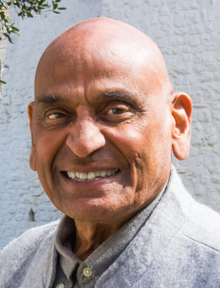 Ravi Ravindra, Ph.D., is an author and Professor Emeritus at Dalhousie University in Halifax, Nova Scotia, where he served as a professor of comparative religion, philosophy, and physics. A lifetime member of the Theosophical Society, he has taught many courses at the School of the Wisdom in Adyar and at the Krotona Institute of Theosophy in Ojai, California. He was a member of the Institute for Advanced Study in Princeton, a fellow of the Indian Institute of Advanced Study in Shimla, and the founding director of the Threshold Award for Integrative Knowledge. For more information, visit ravindra.ca.
Program Format
This is a live, interactive online program that will also be recorded. Registrants will receive on-demand access to recording(s) that can be viewed for four weeks following the conclusion of the program.
Join online via a Zoom link that will be emailed upon your registration.
Please download Zoom for free at zoom.us/download and test your connection at zoom.us/test. For further information, check out www.theosophical.org/FAQ or email webinars@theosophical.org.