

Printed in the Winter 2026 issue of Quest magazine.
Citation: Altman, Nathaniel "Geoffrey Hodson: Reminiscences" Quest 114:1, pg 34-39
By Nathaniel Altman
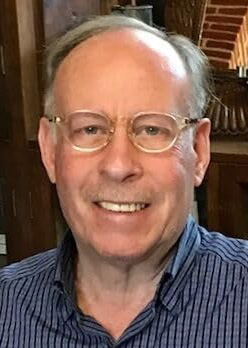 I joined the Theosophical Society in November 1970 while studying at the University of Wisconsin in Madison. After graduating the following June, I began working as a groundskeeper at Olcott. Although I was already a vegetarian, I had visited the kill floor at a large Madison slaughterhouse on a dare. The experience upset me so much that I decided to write a book about vegetarianism, which I began writing at Olcott.
Quest Books agreed to publish the book, and I believe that Helen Zahara, the coordinator of the Quest Books program at the time, asked Geoffrey Hodson—who was a vice president of the International Vegetarian Union and a guest at the Society’s annual convention in 1971—to write the foreword, which he kindly agreed to do. The book was eventually published as Eating for Life, and eventually sold more than 75,000 copies.
I had the pleasure of meeting with Geoffrey Hodson and his wife, Sandra, several times during their stay at Olcott, and reconnected with them when I began studying at the Krotona Institute School of Theosophy in 1972. Geoffrey became my mentor, and I met privately with him on numerous occasions. I also drove him and Sandra to visits and appointments.
During a meeting with him, I lamented that I was a poor student of Theosophy because I had difficulty understanding H.P. Blavatsky’s magnum opus, The Secret Doctrine, and found esoteric concepts like the human monad, chains, rounds, and root races beyond my comprehension.
Geoffrey stopped me short and said, “Nathaniel, ahimsa is the essence of Theosophy. The primary goal of students of Theosophy is to develop ahimsa!” (Ahimsa has been translated from the Sanskrit into English as active nonviolence and dynamic compassion.) He also stated that the main spiritual concept we need to realize on a deep level is that “All life is One.”
During the Hodsons’ stay at Krotona, I was able to attend many of Geoffrey’s lectures. He would sit in a large, blue, high-backed chair that reminded me of a throne. His talks at Krotona Hall were profound, well-prepared, and practical, but they were not devoid of humor.
Knowing that Krotona was a hotbed of gossip at that time, Geoffrey announced during a lecture that he was establishing an “antigossip” society. He then told the audience, “All of you are members!” He later told me, “Nathaniel, the only thing we should do behind someone’s back is to pat it.”
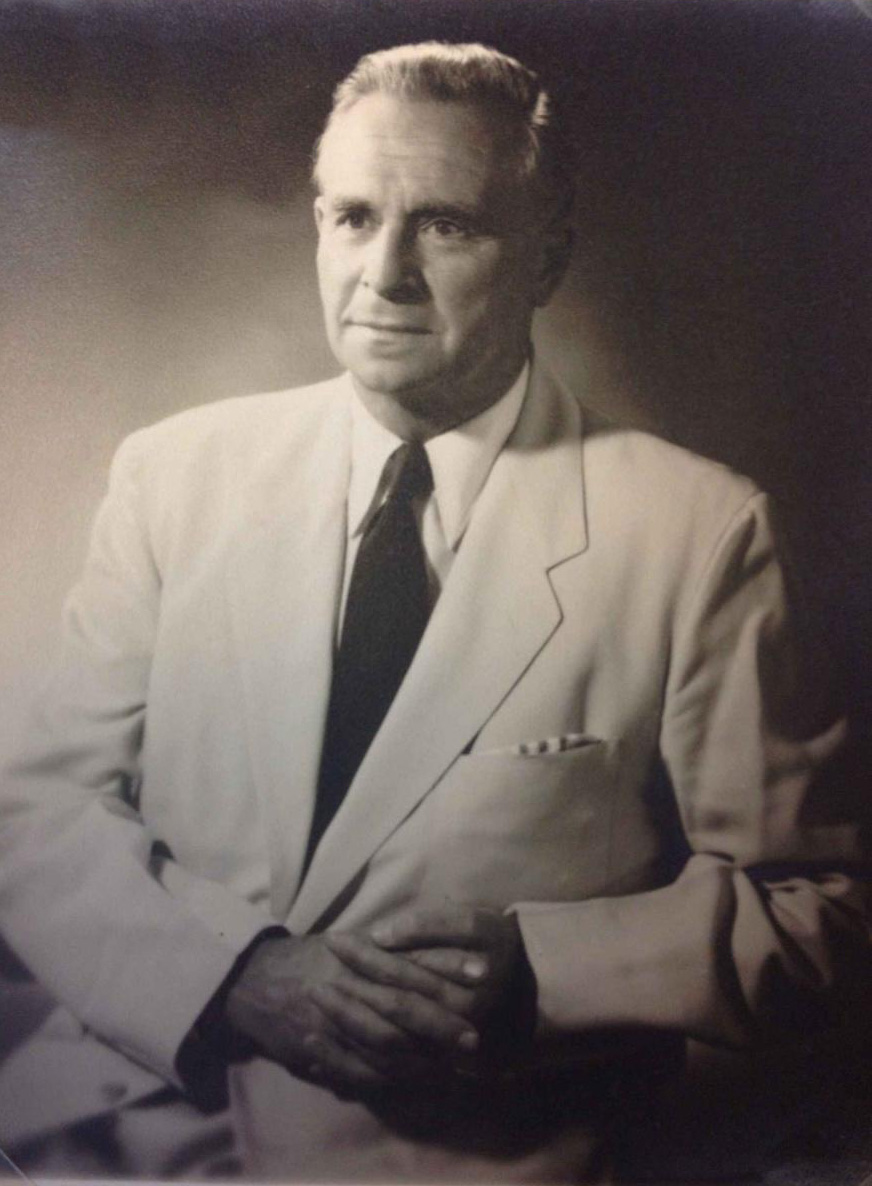 Geoffrey Hodson was a noted clairvoyant. His life work was breathtakingly multifaceted and involved healing, education, mysticism, religion, Masonry, spiritual unfoldment, the angelic hierarchy, peace, humaneness, planetary and solar evolution, art and beauty, the subtle bodies of humans, life after death, the pathway to hastened spiritual attainment, and much more. In his more than seven decades as a writer, lecturer, healer, and counselor, Geoffrey Hodson affected the lives of thousands of people in many different ways.
In my particular case, I feel that he inspired my future contact with members of the devic kingdom, my interest in ahimsa, and the practical application of Theosophical principles. His interest in a wide range of subjects gave me confidence to follow my own varied interests in life.
Geoffrey avoided the limelight and firmly discouraged the guru adoration syndrome that has befallen many spiritual teachers. He never made claim to spiritual status, nor did he reveal any direct contact with Masters of the Wisdom, who are believed to stand behind the founding of the Theosophical Society.
Nevertheless, as we’ll see later on, his personal diary, edited by his wife and published as Light of the Sanctuary after his passing, revealed that during his lifetime he was guided by several adepts, who facilitated his spiritual studies, helped him prepare his talks, articles, and books, and supported his extensive healing and counseling work.
Early Life
Geoffrey Hodson’s amazing life of ninety-six years reads like an adventure story. He was born March 12, 1886, to a family of landowners and gentleman farmers in Lincolnshire, England. He described his life growing up as “ideal,” in a quiet rural area with horses, dogs, birds, and small animals. His family life was stable and loving and included close relationships with parents and grandparents along with four siblings. His mother was active in the local church as both an organist and choirmaster.
According to his account in Light of the Sanctuary, Geoffrey became aware at an early age (during what he called “daydreams”) of “a secret brotherhood of perfected beings with a hidden headquarters from which the members went out into the world to perform deeds of mercy.” He also began having visions involving light and angelic beings in his childhood and teenage years. He wrote:
I was perhaps only five or six years old . . . It seemed that from within the sun itself, a huge birdlike figure of fire, with a long tail shaped like that of a lyre bird, descended and entered my whole body through the crown of my head, almost setting up a blazing fire within me. (Hodson, Sanctuary, 1)
He believed that on more than one occasion, he was saved by unseen beings from accidents and even death.
In his youth, Geoffrey considered himself a devout Christian who believed that everything in the Bible was literally true. After his religious beliefs were confronted by his landlord while he was working at a Liverpool trading company at age twenty-four, he experienced a crisis which, he said, “shattered my treasured faith in the Bible and left me a very, very miserable young man” (Hodson, Sanctuary, 5).
A Quaker colleague at work introduced him to Esoteric Christianity by Annie Besant, which restored Geoffrey’s faith in Christianity by understanding scripture to be a combination of history, allegory, and symbolism.
In March 1912 he attended one of Dr. Besant’s lectures in Manchester. Aside from being deeply inspired by her presentation, he observed her aura, which he reported extended from the lecture hall into the street. As a result, he immediately joined the Theosophical Society and became a member of the Manchester Lodge. He soon became a “visiting teacher” and lecturer for the Theosophical Society in England.
World War I
As a firm believer in the oneness of life, Geoffrey was initially torn between following a life of compassion and becoming a soldier upon the outbreak of World War I in 1914. But one night he had a vision of a Master, holding a sword and extending his hand to him. Geoffrey decided that it was his duty to participate in what he termed a “defensive war” and joined a cavalry regiment and later the Royal Tank Corps, in which he became an officer. While serving in France, he received visions that helped keep him safe from injury and death. He also clairvoyantly saw his brother Stanley, who had recently died in battle. It is likely that Geoffrey’s war experience led him to clairvoyantly study what happens to people when (and after) they die. He also became a strong advocate for world peace, humaneness, and a supporter of both the League of Nations and the United Nations.
Postwar Years
After his discharge, Geoffrey Hodson found work at an interior design firm in Manchester, a job which held no interest. He was soon offered a position with the YMCA working with young people, which involved a move to London. During this time, he met his first wife, Jane (née Carter). He began to have visions of fairies and nature spirits at home, and the new couple often took motorcycle drives to the countryside, where Geoffrey would observe nature spirits. Jane not only supported him personally but assisted in all of his books on the subject of angels and the devic kingdom. He wrote, “I was very indebted to Jane for from the first moment when I began to speak of occult awakenings, visions and experiences, she unfailingly both responded and recorded every single one of them” (Hodson, Sanctuary, 12).
In 1926 or 1927, while Geoffrey was resting in a meditative state on a hillside overlooking a beech forest near the village of Sheepscombe in Gloucestershire, his angelic teacher appeared and communicated with him.
Jane and I were lying on a hillside at the edge of what remained of the beech forest . . . Quite suddenly, and entirely unsought, I had a tremendous expansion of consciousness. It seemed that the whole heavens opened and became filled with light, and I was caught up into a height which I had never hitherto attained. All was radiant with “the light that never was on sea or land”. Gradually, as I tried to adjust myself to this new experience in the higher consciousness (the Causal level, at least, I believe it to have been), I became aware of the presence of a great angelic Being from Whose consciousness to mine there began to flow a stream of ideas concerning the life, the forces, and the consciousness of the universe as these realities express themselves in both angels and human beings. So far as I was able to discern in the brilliant light, He was supernally beautiful—is supernally beautiful, I should say, for the link with Him has never been broken. (I use the masculine pronoun for convenience only.) He was majestic, godlike, impassive, and utterly impersonal. Eventually, He communicated to me that He might be known by the name of Bethelda. A Hebrew friend, an expert in the Kabbalah, later gave me the meaning of this name as “the Angel of the House of God.” (Hodson, Sanctuary, 16)
The information Geoffrey received from Bethelda and other members of the angelic kingdom generated a total of six books, including The Brotherhood of Angels and of Men, Be Ye Perfect, and The Angelic Hosts. These three books have become occult classics, offering advice about how the devas are prepared to cooperate with human beings, providing we play our part.
Geoffrey’s most famous book about devas—The Kingdom of the Gods—was published by the Theosophical Publishing House in Adyar in 1952. It remains in print and is known for its beautiful color renderings of angels and devas painted by Ethelwynn M. Quail under Geoffrey’s direction. An illustrated book, Clairvoyant Investigations, was published by Quest Books in 1984, a year after his passing.
Geoffrey believed that he was the devas’ “human ambassador.” He communicated with them and received wisdom from them in all the places in the world that he visited, including Europe, North America, Australia, New Zealand, South Africa, Indonesia, and the Philippines.
LCC and Co-Masonry
Geoffrey was ordained as a priest in the Liberal Catholic Church (LCC) and wrote several Christian-themed books based on his clairvoyant observations, including The Inner Side of Church Worship (1940), and his magnum opus, The Hidden Wisdom in the Holy Bible, in four volumes.
Geoffrey was a close associate of J.I. Wedgwood, first presiding bishop of the LCC, and appeared to have a good relationship with another LCC bishop, C.W. Leadbeater, a noted clairvoyant and teacher and close associate of Annie Besant. Although I am not aware of any collaboration on clairvoyant investigations between the two men, Geoffrey Hodson vigorously defended Leadbeater after the reliability of his seership was challenged by E.L. Gardner in the 1960s. In An Appreciation of C.W. Leadbeater, Geoffrey supported Leadbeater’s claim to have been in contact with the Masters, his clairvoyant teachings on the aura and the serpent fire (kundalini), his reports of invisible helpers, and teachings about the akashic records.
Geoffrey Hodson was a 32nd degree member of Co-Freemasonry, a Masonic order that admits women equally with men. He wrote two books about Freemasonry, including At the Sign of the Square and Compasses and The Occult Philosophy Concealed within Freemasonry.
Travels and New Zealand
In 1929, Geoffrey visited the United States for the first time to attend the Theosophical World Congress in Chicago and spent the next four years lecturing around the United States and Canada. He also lectured in South Africa, the Philippines, Australia, and New Zealand.
He also gave many radio broadcasts in various places in the world, especially in Australia when the Sydney radio station 2GB was under Theosophical control. It was broadcast from The Manor, a center for spiritual retreat and the teaching of Theosophy. Leadbeater was the head of the Manor and was among its first residents. Seminars, study groups, and retreats are conducted there as well as other activities, such as meetings of the LCC and the International Order of the Round Table, an organization rooted in Theosophy that focuses on elevating young people. After Leadbeater’s passing in 1934, Geoffrey, writing in Theosophy in Australia, reported that Leadbeater continued to reside at The Manor, where he oversaw the work, assisted by the Manor Angel (Tillett, 255).
During this time, Jane Hodson began to develop symptoms of multiple sclerosis, which drastically limited her mobility. A young Australian Theosophist, Sandra Chase, offered to care for her, which continued until Jane’s passing in 1962. This enabled Geoffrey to travel more. He, Jane, and Sandra eventually settled in New Zealand, which Geoffrey believed was a future center of a new race of human beings. After establishing himself in his new country, Geoffrey became involved in the vegetarian and animal rights movements in addition to his association with the New Zealand Theosophical Society.
Polidorus Isuranus
In 1988, five years after his death, Geoffrey Hodson’s private diaries were published under the title Light of the Sanctuary, compiled by Sandra, who became Geoffrey’s second wife after Jane’s death in 1962. During his lifetime, most of his rich inner life was unknown to those outside of his immediate family and possibly a few close friends and collaborators. This book revealed for the first time that beginning in 1945, he often communicated with Masters of the Wisdom, especially an adept teacher known to him as Polidorus Isuranus, “a Recorder of the Luxor Brotherhood” from Egypt. He regularly communicated with this Master, who often gave him both instruction and advice when preparing his lectures, conducting healing and counseling work, and writing books. Geoffrey’s contact with his Master continued until his passing in 1983. Many of these communications are included in Light of the Sanctuary and make fascinating reading.
Although Geoffrey Hodson was best known by members of the TS as an authority on Theosophical philosophy, he devoted much of his life to other, less-known areas of teaching and activity.
Humaneness
As I mentioned earlier, Geoffrey’s experience during World War I taught him to become a strong advocate for peace and nonviolence. In addition to experiencing the horrors of war with his expanded faculties of clairvoyant sight, he also became more aware of the harm humans inflict on other living beings, especially with vivisection and meat eating. He became a staunch animal activist and was the founder and president of the New Zealand Vegetarian Society and the Combined Animal Welfare Organizations in New Zealand; he was also a vice president of the International Vegetarian Union. Many of his writings on humaneness and vegetarianism were published in both Sharing the Light (Theosophical Publishing House) and The Call to Humaneness (Gaupo Publishing).
During one of our meetings at Krotona, Geoffrey related his experience of observing a large slaughterhouse near Chicago with clairvoyant sight. I described his reactions in an article published in Vegetarian World in 1973:
Although Mr. Hodson normally comes across as the typical reserved English gentleman which he is, he became very emotional, describing the scene as “the most ghastly horror imaginable.” He spoke movingly of the intense fear, rage and pain experienced by the slaughtered creatures, which takes powerful form around the slaughterhouse, permeating the atmosphere with a “giant tormented storm cloud” of red color (from rage and pain) with vivid blotches of dark grey (from fear). He expressed deep concern about the effect of this psychic pollution on the community, and the pronounced effect it could have on children, who are most sensitive to outside influences such as this. (Altman, Vegetarian World, 5)
Geoffrey strongly believed that human cruelty was intimately connected to human unhappiness, war, and disease. In an article appearing in The Humanitarian in 1958, he described how to relieve human sorrow:
That way is to outlaw cruelty—the unnecessary infliction of pain—on Earth as humans are now seeking to outlaw war. Abolish torture and needless killing; replace them with humaneness in every department of life, especially the choice of recreation, food, clothing and in the practice of medicine. Then, with right thinking, the reverent use of the soil, correct nutrition and hygiene, by preventing the problem of disease will be solved. (Hodson, Humaneness, 40)
Writing in The American Theosophist in 1944, he also spoke passionately about the dangers of materialism and how they contribute to the unhappiness of the world:
How can the child perceive this shining peak of human attainment when from birth to death it is surrounded by commercialized adult humanity, absorbed with self-advertising, with gaining possessions and living self-centered lives? The child is brought up and trained amidst all this, receives an education which is eighty percent materialistic, in which true religion only has a minute part. The student is taught to memorize facts and ideas in order that, by repeating them correctly at examination, they will win educational rewards, defeat their fellow pupils, shine over them, and then sell to the highest bidder the whole result of education in the marketplace. All this, I submit, is a crime against the child; it is therefore a crime against adults and against humanity as a whole. (Hodson, Humaneness, 27)
Healing
Geoffrey Hodson was a noted healer and taught that many health problems originate beyond the physical realm. He utilized his clairvoyant abilities to understand the deeper causes of disease and ways of supporting the healing process. He strongly believed that a major cause of disease was cruelty, especially towards animals. He wrote numerous articles about health and healing, as well as An Occult View of Health and Disease. He also created a healing invocation that he received from angels, which the Theosophical Order of Service uses in spiritual healing work. Other healing rituals were received from his adept teacher. Today dozens of healing circles regularly meet to perform healing rituals based on that invocation. Here is a sample of one healing invocation, adapted for the aftermath of the wildfires on Maui in 2023:
Hail! Devas of the healing art! Come to our aid.
Pour forth your healing life into the people, animals and ecology of Maui.
Let every cell, every molecule, be charged anew with vital force.
To every nerve give peace.
Let tortured sense be soothed.
May the rising tide of healing life set every limb aglow
As by your healing power both soul and body are restored.
May each person, animal and plant affected by the fires in Maui be left with an angel watcher to comfort and protect them
Until health returns, or life departs from physical form.
May the angel watchers ward away all ill,
hasten the returning strength,
or lead to peace when life is done.
Other Activities
Geoffrey Hodson served as director of the School of the Wisdom at the Theosophical Society’s international headquarters in Adyar in 1953‒54 and again in 1954‒55, 1961, and 1972‒73.
After Jane Hodson died in 1962, Sandra Chase became the next Mrs. Hodson. The couple was very devoted to each other and enjoyed a very close and loving relationship. Sandra not only took care of her husband (making sure that he would not get overtired) but edited all of his later writings. A former general secretary of the Theosophical Society in New Zealand, Sandra Hodson was a respected Theosophical teacher and author in her own right.
During the 1960s and 1970s, Geoffrey continued to travel and lecture around the world. He visited Olcott in 1971 and spent several months giving classes and lectures at Krotona in 1971‒72, before serving as director of the School of the Wisdom at Adyar. He also spent time lecturing and teaching in the Philippines, where a scholarship fund was established in his honor to support students at the Golden Link School, a learning center for elementary and high-school students near Manila, as well as a college based on Theosophical principles.
A Developing Legacy
Because he lived such a multifaceted and fascinating life spanning ninety-six years, I believe that Geoffrey Hodson’s legacy is still being established. The most prolific Theosophical writer of the twentieth century, Geoffrey wrote more than forty-six books and more than 700 articles on an extensive range of subjects, including yoga, clairvoyance, healing, education, mysticism, esoteric Christianity, spiritual unfoldment, the angelic hierarchy, peace, humaneness, planetary and solar evolution, art and beauty, the subtle bodies of humans, world religions, life after death, the pathway to hastened spiritual attainment and much more.
In addition, Geoffrey presented hundreds of public lectures and classes. A major source of his course material can be found in his two-volume Lecture Notes, and more than forty of his talks can be heard as audio files available online from the Theosophical Society in America.
Geoffrey conducted spiritual counseling and healing sessions for thousands of individuals over more than sixty years. He collaborated extensively with physicians and scientists, using his clairvoyant abilities in such fields as healing, chemistry, biology, anthropology, archaeology, embryology, physics, and astronomy.
He left his mark as an early and powerful advocate for childhood education, antimaterialism, diet reform, world peace, vegetarianism, and animal rights. He was awarded the Theosophical Society’s Subba Row Medal for his contributions to Theosophy.
Although he was physically frail as he moved through his eighties, Geoffrey’s mental faculties remained intact until his death. At the age of ninety-six, he gave his last public lecture on May 4,,1982, at H.P.B. Lodge in Auckland to a packed hall. Eight months later he passed away in Auckland, on January 23, 1983, after an amazing life as a dedicated server of the Masters and humanity.
Geoffrey Hodson died in full consciousness, with his last words to Sandra being: “I am leaving now. Please don’t try to stop me.” Sandra Hodson wrote:
Geoffrey left us peacefully in the early morning of 23 January 1983. Our home seemed to me then, to be steeped in a blessed stillness and silence that nothing could disturb. Upon Geoffrey’s face there was an expression of utter peace and joyous serenity—beyond any words. It was as though the Masters were so very close at this time. In looking back over our life together and before the world, I can testify that never once has he ever made any claim to greatness or to the superior powers which he most truly possessed. He was the most humble of men, living his whole occult and spiritual life in secrecy and anonymity. (Hodson, Sanctuary, 546)
Robert Ellwood, emeritus professor of religion at the University of Southern California and vice president of the TSA from 2002 to 2005, described Geoffrey as “worthy of compare with the greatest seers and mystics of any land or time.”
Sources
Altman, Nathaniel, “The Theosophical Basis of Vegetarianism,” Vegetarian World, 1973.
Hodson, Geoffrey. “An Appreciation of C.W. Leadbeater.” Available online.
———. The Call to Humaneness. Brooklyn, N.Y.: Gaupo Publishing, 2024.
———. Lecture Notes. Adyar: Theosophical Publishing House, 1955.
Hodson, Sandra, ed. Light of the Sanctuary: The Occult Diary of Geoffrey Hodson. Manila: Theosophical Publishers, 1988.
Tillett, Gregory. The Elder Brother. London: Routledge & Kegan Paul, 1982.
Nathaniel Altman has been a member of the Theosophical Society in America since 1970. He was a student of Geoffrey Hodson at Krotona and has published several of Mr. Hodson’s out-of-print books through Gaupo Publishing (https://www.gaupo.net), a publishing venture he began in 2017. (For an excerpt, see Quest, spring 2025.) He has also authored more than twenty books on diet, palmistry, health and healing, nonviolence, and our relationship with the natural world. Nathaniel lives and works in Brooklyn, New York. His web page is https://www.nathanielaltman.com.