

The Chakras and the Human Energy Fields

Printed in the   Fall 2025  issue of Quest magazine. 
Citation: Karagulla, Shafica & van Gelder Kunz, Dora  "The Chakras and the Human Energy Fields"   Quest 113:4, pg 16-23

by Shafica Karagulla, MD and Dora van Gelder Kunz

Shafica Karagulla, MD, and Dora van Gelder Kunz teamed up to produce a study, The Chakras and the Human Energy Fields, published by Quest Books in 1989. Dr. Karagulla studied Dora's ability to clairvoyantly diagnose the disease process in numerous case histories.

Shafica Karagulla (1914‒86) was a psychiatrist and surgeon noted for her research into abnormal mental states and higher sense perception. She died in a tragic accident before the book was completed.

Dora van Gelder Kunz (1904‒99) was a noted clairvoyant who developed the healing modality called Therapeutic Touch with Dolores Krieger. She was president of the Theosophical Society in America from 1975 to 1987. She completed this book with the assistance of Emily Sellon.

This excerpt from The Chakras and the Human Energy Fields was published in The Quest, spring 1989.

Throughout the long evolutionary journey of life on this planet, living forms have developed within the narrow constraints set by nature. Like the caterpillar wrapped in its cocoon, man’s experience has been limited to the range of his five senses. The conscious perceiver and interpreter of his physical environment, he has been largely unaware of the presence of other dimensions of reality which lay all about him. This is particularly true of modern man.

But today we recognize that the sensed world is far from being the only “real” domain of experience, and that in fact our senses merely deliver impressions to us that the mind/brain interprets according to its own inner vision. Moreover, the narrow boundaries of the sensed world are crumbling, as our knowledge expands to include quantum reality as well as the information bombarding us from outer space. The possibility of extending our understanding into realms long hidden from us by the limitations of the senses is opening an ever vaster world to us—a world which, far from being remote, is now seen to lie all around us, and even to be part of our own being.

As we seek to explore the world of finer perceptions, a number of questions arise. What are the mechanisms for perceiving the hidden world which lies beyond the reach of our senses? Can we develop the capacity and use it creatively and constructively?

At this stage of inquiry we are very much in the position of the blind men in the parable, each of whom tried to describe an elephant in terms of that portion of the animal he was able to grasp. Similarly, in a village of 100 inhabitants, if ninety-eight were color-blind, we could expect them to be very skeptical of the descriptions of the remaining two people who perceived the full spectrum of prismatic colors. In fact, they probably would be sure that these two were visionaries, or story telling, or just hallucinating. However, if over a period of time 20 percent of the inhabitants began to see the whole spectrum, the rest might begin to concede the possibility that it might exist, even though beyond their own perception. This story is somewhat analogous to the present state of affairs vis-à-vis extrasensory perception.

There are many signs that the next great adventure for humanity will take place in the realm of consciousness, and that a whole range of yet unexplored possibilities awaits us. These raise many unanswered questions. What are the boundaries of the self? Where do self and environment begin and end? Can we develop reliable mechanisms for discovering these subtle interrelationships?

Just as the five physical senses give us access to a certain range of physical reality, so the higher senses allow us to perceive elements of the supersensory world. Higher sense perception includes clairvoyance, which means “clear seeing,” and usually refers to the ability to perceive the vital and/or the emotional field. Because such perceptions have seemed to be both exotic and idiosyncratic (since they are experienced by the few), today’s scientists and researchers have never tried in any systematic way to explore and understand the mechanisms which permit such phenomena to exist. In a culture committed to the scientific method, this neglect would appear to stem from a fundamental prejudice or misconception.

Scientists have held that it lies outside the province of their discipline to investigate claims that it is possible to perceive states of matter subtler than the physical. For this reason, the painstaking work of J.B. Rhine in the field of telepathy and clairvoyance had little impact upon the scientific community. But physicists concerned with quantum physical reality are investigating probabilities and indeterminacies which are far removed from the so-called facts of our gross physical world, and can only be “observed” through their effects. Is it not also likely that if we were to extend our explorations into the subtler aspects of that world, we might find these dimensions just as lawful, just as amenable to study and understanding, as the complex and ambiguous world of quantum reality?

Nevertheless, some research is going forward in this area, using man himself as the sensor, such as the practice of healing methods like Therapeutic Touch. Sensitives who can observe the interactions of vitality, emotion, and thought processes remove these interactions from the realm of the purely subjective. Their observations, however, differ in degree, in clarity, and in comprehension. Some of them perceive only the etheric or life field; others perceive both the field and the etheric centers (chakras) which are a key element in the basic pattern that characterizes man, both as an individual personality and as a member of the human species. Some clairvoyants see the astral or emotional field rather than the etheric. Such psychics do not usually perceive the chakras within the emotional field unless they have been trained to do so, or have great natural gifts. The mental field and its centers are seen only by those with a highly developed type of specialized clairvoyance.

Thus far, breakthroughs into these levels of reality have met with a great deal of confusion and misunderstanding. The result has been a flood of “psychic” literature of very uneven quality and credibility, all claiming to furnish accurate information about the supersensory dimensions of human experience. Unfortunately many people, bored and dissatisfied with the present-day scene and its lack of values, accept these accounts uncritically. Such enthusiasts often plunge into personal experimentation without regard for the pitfalls that could be encountered in entering any new area of experience without previous knowledge or preparation. Like the ability to walk or fly, such capacities must be developed. This takes time, patience, and much more effort than those who are eager for new sensations wish to expend. Thus interest in the so-called psychic world often becomes more of an escape from the constraints of everyday life than a serious search for new knowledge.

This situation does not change the fact that many people today are exhibiting various degrees of paranormal ability, including clairvoyance, clairaudience, precognition, telepathy, psychometry, dowsing, and healing. It is beginning to look as though these abilities are emergent, and may eventually become a normal part of human consciousness. If we accept the concept that evolution is a learning process, we realize that living systems are continually developing new capacities for a creative response to their environment. If this is so, why should not human beings begin to extend their perception to supersensory levels, and develop the ability to explore more encompassing dimen­sions of reality?

The first requirement for the development of higher sense perception is a recognition that the supersensory realms are not opened up “magically,” but are regulated by natural laws just as precise as those which govern the physical world. If they are to become known to us, we must define more precisely the ranges of supersensory perception; the energies involved and their relationship to physical health and disease; the effects of behavior; the role of the mind and of mental images, intent, and motivation; and much more. Since there are different types of extrasensory perception, and since all observation is filtered through the percipient’s mind, we must also determine the degree of “observer effect” in clairvoyant investigation, and develop a system of checks and balances, as well as a common vocabulary. These are only a few of the requirements if we are to bring more order and coherence into the whole field, especially as it bears upon our understanding of the human being.

So far, medicine has been concerned with problems of the physical organism, achieving very important results, even though the question of how healing takes place still remains a mystery. Today our ability to deal with hitherto intractable diseases has been enormously enhanced through the development of scientific sensors, which allow the body to be seen from a number of different aspects. Infrared and liquid crystals give a heat color pattern called thermography; the newest medical instrumentation using ultrasound and nuclear magnetic resonance gives us other dimensions and patterns. At a more fundamental level of physical being, we are becoming accustomed to thinking of ourselves in terms of systems, processes, and patterns of energy, rather than of dense materiality.

Sensitives who can observe the interactions of vital energy with emotional and mental processes could remove these interactions from the realm of the purely subjective by acting as human “sensors.” The observations of those gifted with such abilities, however, differ widely as to the reliability of their faculty, as well as in its clarity, precision, and applicability to physical situations. In spite of these problems, we must persist, since the field holds so much promise.

Perhaps the most important conclusion that emerges from a study of the extensions of physical perception, which clairvoyance makes possible, is that the physical brain is not the originator of consciousness, but rather its instrument. Acceptance of this concept would have far-reaching effects upon the way we humans look at ourselves, and thus upon the world we live in.

Up to this point in human evolution, the world of the five senses has been our safe and familiar environment, a school for learning which has seemed to set the boundaries of human experience. Unaware of the possibility of experiencing a world beyond the physical, we have only caught glimpses of its dimensions through the arts or through the witness of mystics, saints, and seers. But now science has also begun to probe some aspects of this vaster world. More and more exotic discoveries are being made and startling theories propounded about the nature of our universe. Since it now seems that a considerable number of people have experienced some portions of the supersensory realm for themselves, should we not make every effort to bring these experiences under serious scrutiny?

It is our hope that the material offered here will be helpful in suggesting some of the principles that govern the subtler dimensions of our world—dimensions we all share in equally, if unknowingly. They are part of that greater whole which comprehends not only the physical earth with all its past history and future possibilities, but also the thoughts and feelings, errors and accomplishments, insights and intuitions of all its inhabitants.

Higher Dimensions of Consciousness

The third aspect or facet of the personal self is the instrument through which the mind finds expression; in Theosophical and esoteric literature this is traditionally called the mental body. As previously mentioned, just as the emotional or astral level has a higher frequency and subtler state of materiality than the etheric, so the mental is finer-grained and faster-moving than the astral. However, it should be remembered that the mental field interpenetrates both the astral and the etheric at every point, and the mental body also conforms to these vehicles in structure. The mental dimension is in constant interplay with other aspects of the personality throughout life, and its energy permeates every experience, even when we are not engaged in intellectual pursuits or even consciously thinking.

The energy which pours into the mental chakras from the inexhaustible reservoir of the universal mental field circulates through the mental chakra system in much the same manner as at the astral and etheric levels. But the mind is more complex than the emotions: it has in fact two primary aspects or functions which make possible the subtlety, originality, and conceptual power of the mind, at the same time that it can lead us into false reasoning and self-delusion. Because of its multifaceted nature, the habits and patterning of the mind can affect the disease process adversely, but it can also be a powerful force for health, growth, and change.

At the level of everyday experience, the mind is the instrument which integrates and interprets the stream of sensory data which flood into us from every side. All these data are processed and evaluated by the brain/mind and applied to our behavior. This aspect of the mind delivers the common sense we all use in the business of daily living, and perceives the relationships between things, people, and events that give these phenomena their context and meaning.

The conceptual or abstract mind cognizes meaning of a higher order: the ideas which give events their significance; the unities which underlie life’s variables; the structure, proportion, balance, harmony, order, and lawfulness of nature; the relationship between human life and the earth, as well as between the individual and mankind. This dimension of the mind is a universal human attribute, even though it may not be developed to the same degree in all of us.

The human mental body is an ovoid like the astral, but it is considerably larger and less dense. Its colors and quality are good indicators of the individual’s interests and mental powers, whether latent or active, for sometimes the capacities we are born with do not mature during life. All this shows up in the mental body, just as the astral aura accurately reveals the emotional life.

Because the mental and emotional fields are so closely interconnected, the mind is colored by emotion, just as the feelings are conditioned by thought. This is a universal characteristic, but when it is unbalanced or out of control the condition may become pathological. However, if the mind is not hampered by emotional stresses, it is a fine and flexible instrument for integrating and assimilating all levels of personal experience: mental, emotional, and physical.

The physical brain, much like a supercomputer, registers, stores, and retrieves what the mind discovers or originates. The view of the mind/brain relationship which emerges from our research is very different from that generated by most psychophysiological theorizing. Far from being a product of brain activity, the distillation of meaning and the interpretation of experience are seen to derive from a deeper level of the self. Such insight is then developed rationally by the mind and related to other knowledge, while the brain, which is the mind’s instrument or physical partner, registers the information. In other words, the mind is dependent upon the brain for physical expression, but it also transcends the brain mechanism and can to some extent compensate for its defects.

The mental body extends about three feet (ninety centimeters) beyond the periphery of the physical body, and interpenetrates both the etheric and the astral bodies. The individual who perceives the “I” more in terms of his thoughts than his feelings usually has a mental body that is brighter and more vital than the average, and of finer texture. When such a person is using the mind, energy moves more swiftly in and out of the mental chakras, and the whole mental body becomes more lively and luminous.

The speed with which the energy moves in and out of the chakras, the luminosity of the colors, and the rhythm and the degree of brightness of the different chakras all indicate the quality of the mental body and the areas of special development.

When there is a harmonious relationship from the mental level through the emotional to the etheric, the flow of energy through the chakras displays a rhythmic and unimpeded pattern. Unfortunately, many human beings are subject to periodic mental or emotional storms and stresses, and these have their effects in the etheric and physical bodies.

The energies at the mental level are discharged at a more rapid rate and with more volatility than the lower energies. In fact, when energy flows actively in and out of the mental body, a field of force springs into being around the individual which affects his environment in direct proportion to the strength of the thought. Thus ideas which are charged with mental power strongly influence other individuals. This may or may not be directly related to the truth of the ideas themselves: grand ideas stand the test of history and contribute to the growth of human culture, but mistaken ideas can dominate large groups of people when these are projected with great force and conviction, as was the case in Nazi Germany.

The transformative power of thought when it is reinforced by conviction is well known. Religious conversion is one example, but on a lesser level, the ability to break long­standing habits, such as smoking, results from the power of the mind to change behavior. We no longer believe the dictum, “I think, therefore I am,” but we realize that what we think strongly affects us, whether as individuals, members of organizations, or citizens of a nation. In fact, national purpose or character is largely dependent upon the way a people thinks of itself.

How are such widespread ideas transmitted? The effect is partly achieved through written argument and speech, but even more through sharing a common vision or worldview based upon a strong mental image. Such a mental image has come to be known as a thought-form. The spread of ideas is achieved through the mind’s ability to construct a powerful and well-defined image within the mental body, and then direct it toward its object with clarity and intensity. This ability to project one’s thoughts clearly is an important factor in successful teaching, as well as in political life. But the ability to create strong thought-forms can also react upon us negatively, for if they become too rigid they can surround and imprison us within a wall of our own making, thus preventing the inrush of new ideas and fresh mental energy. We then become ideologues or fanatics, who reject all but their own interpretations of truth.

Some clairvoyants are able to see the thought-forms within an individual’s mental body. A discussion with the late Phoebe Payne Bendit, who was acknowledged to be a competent and trained clairvoyant, helped to clarify this matter. She recounted the case of a man who came to her claiming that he was possessed by several great musicians who had passed on, and that other clairvoyants had corroborated his claim. But when Phoebe Bendit observed him carefully, she found that these figures were not those long-gone musicians at all, but rather the man’s wish-fulfillment thoughts that he had charged with his own hopes and desires. She warned his family that he was headed toward a dangerous mental illness, and unfortunately this materialized a few months later, when he was diagnosed as a paranoid schizophrenic and admitted to a mental hospital.

When Mrs. Bendit was asked how she differentiated the patient’s thought-form from an actual astral entity, she replied: “How would you differentiate between a living person and a statue? Isn’t one obviously alive, while the other is not? The same holds true on the astral and mental planes. An actual person, even though dead, has a quality of vitality about him, so that he moves, changes, and responds to what is going on. In contrast, a thought­form is lifeless and static, and its energy comes from the astral and mental fields of the individual who harbors it.”

The great advantage of being able to see thought-forms is that we can become aware of what we are generating, and thus change them to more constructive images. But even if we cannot see them clairvoyantly, when we realize that our thoughts have the ability to affect others directly and that we energize them with our emotions, we begin to feel a degree of responsibility for our thoughts that was previously reserved only for our actions. And indeed we come to acknowledge that thoughts are actions of a kind, in that they affect behavior.

The Effect of Visualization on the Mental Level

The ability to use our minds constructively in order to achieve good health and personal self-transformation is the subject of hundreds of books currently being offered to the public. Most of these suggest methods that can be used with some degree of success, for the mere conviction that one can effect personal change and growth is enough to start the process moving. Because of the interest in various techniques which employ visualization and different forms of relaxation and/or meditation, we conducted an exploratory inquiry into the ways students use some of these techniques.

We discovered that a few members of the group we studied had no ability to perceive a mental image. When they closed their eyes, they were aware of nothing but blankness and darkness. Most of the students, however, were able to hold in their mind’s eyes the object they were asked to visualize, such as the face of a friend or a simple colored geometric figure. When they were asked how they perceived this mental image, most of them said they visualized the object outside themselves, at a distance of about twenty centimeters in front of their eyes, as though they were reading a book. Others reported that they visualized the object inside their heads, usually in the frontal lobes of the brain, although a few said they saw it in the back of the brain in the occipital region. There was also a very small group that said they could not only think of the object but could also perceive it as a picture flashing before their eyes without specific localization.

In most cases the mental image which was formed remained static. Although holding on to such an image may be an excellent exercise in mental concentration, it will have little effect on the mental, astral, and etheric fields unless it is energized and has movement. For example, if a person is emotionally upset and is told to visualize a green disk over the solar plexus area in order to help him calm down, it should be perceived as a green light flowing into his solar plexus and thence harmonizing the whole abdominal region. In other words, if the thought­form is to be effective, it must maintain its dynamics.

In another experiment, DVK was asked to observe the effect on VPN’s* throat chakra as she visualized certain geometrical forms and colors. DVK was not told what symbols were being used, but was merely to observe their effects on this chakra, which was somewhat leaky.

* VPN is Viola Pettit Neal, a teacher of the perennial philosophy and, with Karagulla, author of Through the Curtain. She worked with Karagulla and Kunz in researching the material discussed here. DVK is Dora Van Gelder Kunz.

At first, VPN visualized a deep blue-violet, diamond-shaped pattern a few centimeters in size and localized in front of the throat chakra. DVK reported no effect. The second symbol visualized was a golden diamond-shaped object. DVK reported that the image was speeding up the throat chakra very slightly, but that the effect was more apparent on the astral level than on the etheric, where the symbol did not seem to hit the core of the center. When a silver-blue diamond was visualized, it too affected the astral chakra but not the etheric. The conclusion seemed to be that when visualization is a purely mental exercise, as it was in this case, it does not seem to affect the chakras. On the other hand, this center does respond to the visualization of a symbol which has some significance or inner meaning for the practitioner, as attested by the effective use of visualization in patients.

The Mental Chakras

The chakras within the mental body correspond to those on the astral and etheric levels, processing energy and acting as media of exchange with the universal mental field. Each mental chakra is also closely linked with its higher frequency counterpart on the intuitional or buddhic level. All together they form a closely integrated system which could be imaged as a four-dimensional grid, in which the energies move laterally through each chakra system and also vertically between the different levels. The energy on the mental level moves more swiftly and at a higher frequency than on the emotional, just as the emotional is higher than the etheric.

The energy of the mental field is stepped down as it passes through the chakras, and can in this way have a direct effect on the physical body if it is not blocked at the emotional level, which is sometimes the case.

The frequency of the energy which flows into the chakras depends on the mental development of the individual. If there is a disturbance in one of the mental centers, it will be transmitted to the emotional and etheric levels, but it is more usual for the disturbance to occur at the astral level. An astral disturbance will not only affect the etheric chakra but will also inhibit the energy coming in from the mental level. The whole process is very complex.

When there is a harmonious relationship among the various aspects of the personality, the energy flows from level to level rhythmically and freely. Unfortunately this process is rather rare, since people interrupt the harmony in a variety of ways: through stress, anxiety, mental rigidity and emotional storms, to name only a few. If such conditions persist, the physical body is eventually affected adversely.

As in the astral chakras, the speed with which the energy moves in and out of the vortices, the luminosity of the colors, the rhythm and the brightness of the different centers all

indicate the quality and power of the mind, and the areas of special development or ability.

The Causal Body

Although the causal body was not the subject of our investigations, DVK found it impossible not to refer to it occasionally, since the fundamental reality within every human being is what we call the Self, although it is also known as the Soul or Spirit. The highest vesture of the Self, which is known as buddhi (insight, wisdom, “clear seeing,” or prajna), is termed “causal” because, according to esotericism, it carries the Self’s fundamental intentionality to be, and this is the ultimate cause of our existence.

By whatever name, this is the real, enduring dimension of true being in each of us—that which persists through all the changes and vicissitudes of our life, and gives it meaning and continuity.

This spiritual dimension is the source of all that is best in us, and can exert a powerful influence for growth and self-transformation. According to the doctrine of reincarnation, those fruits of experience which we have transformed into enduring qualities mark the growth or evolution of the individual self. These are retained from life to life within the causal body, which becomes a composite of the highest qualities of the Self: insight, intuition or direct knowing, creativity, intentionality, aspiration to God or the good, and the purest forms of love and compassion. It can be called the true vehicle of self-awareness, if by that we mean universal consciousness focused in the individual self.

Seen clairvoyantly, the causal body is pale and ethereal, with irridescent colors like those in a soap bubble. It was called the augoeides by the Greeks, the luminous radiation of the spiritual Self, of which incarnate life is but the shadow. But it is also termed “causal” because it gathers together the fruits of our long struggles and sacrifices to grow in understanding, and in these lie the true causes of what we are here and now—the seeds of our qualities of mind and heart. At this level, the Self is not constrained by the usual limits of time and space and causality, but is able to experience the universality of life and to perceive meanings and interrelationships which are often hidden from us during physical existence.

The causal body does not disintegrate after death as the astral and mental bodies eventually do, but persists from life to life. In Tibet, tulkus or “incarnations” are said to be saints or teachers who are reborn again and again with access to the same memories and capacities they had before. Although such cases are rare, there is within the causal dimension the distillation of all earthly experience, and because it is ever-present, this record is accessible to one who has the ability to perceive it.

In the case of some of our patients, it was obvious to DVK that the problems she encountered were rooted at levels beyond the physical, the emotional, or even the mental, and she therefore searched for their explanation more deeply, within the causal dimension.

Artificial Intelligence in the Age of Aquarius

Printed in the  Winter 2026  issue of Quest magazine. 
Citation: Grasse, Ray  "Artificial Intelligence in the Age of Aquarius"   Quest 114:1, pg 19-22

By Ray Grasse 

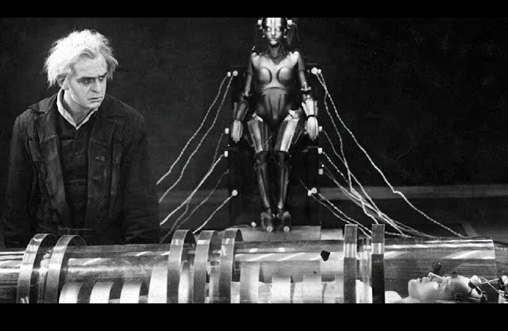
Ray GrasseThough a critical and box office failure on its release in 1927, Fritz Lang’s movie Metropolis has since come to be regarded as not only technically groundbreaking but prophetic in some ways. In addition to its depiction of a future society split by enormous class divisions, its story involves a robot, created by a mad scientist, that’s given the features of a beautiful woman, and which is used to manipulate the working masses toward destructive ends. It’s an early film depiction of artificial intelligence, or AI, and one that’s all the more striking because of the future time frame in which its story is set: the mid-2020s. In other words, right now!
Since that time, the subject of AI has become nearly omnipresent in cinema, television, and literature, leading many to muse over both the perils and promises of this rapidly evolving technology. As it so happened, when Richard Smoley told me the theme of this issue of Quest would be “Intelligence: Human and Artificial,” I had just watched Lang’s film yet again several nights before and was struck by how timely that film has now become.

Is humanity on the verge of a profound change as a result of AI? It certainly seems that way. Our lives have been changed in virtually every respect by computers, which now infuse every part of our lives—ATMs, credit cards, movies, the Internet, YouTube videos, our smart phones, cars, appliances, and so on. One way or another, these are all made possible by computers—that is, artificial intelligence.

But all this raises another, very different question: why is this happening right now? In other words, is the timing of this development simply a matter of chance, the result of blind historical forces—or there something deeper and more esoteric responsible?

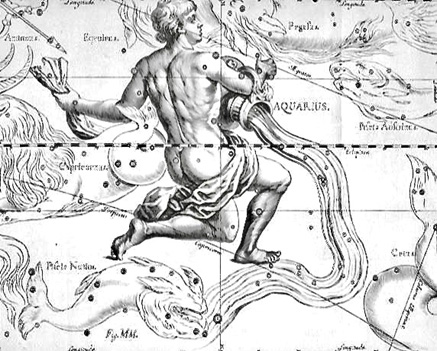
I’d like to approach this question from a perspective I’m personally familiar with: astrology. In that spirit, I’d like to suggest that we might draw some useful insights from a doctrine known as the “Great Ages,” a broad perspective that suggests that roughly every 2,100 years, there is a seismic shift in the archetypal dynamics of history and of human psychology. According to this doctrine, we’re said to be moving from the Age of Pisces to the Age of Aquarius. While the exact timing of this changeover is debated, it’s safe to say there is considerable overlap involved in any such transition, and that we now find ourselves straddling the divide between two great epochs. While it’s beyond the scope of this short piece to explain all the astronomical and astrological dynamics involved in this process (for that, I’d refer readers to my book Signs of the Times), even a basic overview of some essential principles can help shed some important light on the extraordinary changes taking place in our world.

        Metropolis
  Brigitte Helm and Rudolf-Klein-Rogge in Metropolis (1972). Directed by Fritz Lang. U.f.a./Album/Alamy

From the Era of Water to an Era of Air

To a great extent, the deeper significance of any astrological age can be understood by looking at the underlying “element” it represents, since each element symbolizes a particular mode of consciousness. There are four of these in all—earth, water, fire, and aireach of which is repeated three times throughout the zodiac.

For the last two millennia, we have been under the influence of the “watery” Age of Pisces. Simply put, humanity has been perceiving both the world and itself largely through the lens of emotion, and alongside that, feeling-based beliefs. The Piscean influence has been neither all good nor all bad. Destructively, it’s resulted in an era characterized by dogma, persecution, self-abnegation, and an ethos of escapism to a heavenly realm beyond this one. In its more constructive side, that same watery emphasis has ushered in a newfound dimension of soul, an awakening of conscience, and an era of profound artistic creativity.          

In contrast, the emerging epoch of Aquarius is ushering in a phase governed by the element of air—a far more mental mode, concerned with thinking and communication. This suggests that the emerging Great Age will be one where the mind and information, rather than emotion and interiority, reign supreme. Terms like the “information superhighway” and the “information revolution” are two examples of that emerging shift, while the modern separation of church and state is yet another, as our rational minds begin disengaging from the more dogmatic and emotional concerns of the old order.

Whereas the previous Great Age witnessed great sea explorations, the emerging Aquarian era is already associated with a startling rise in aviation technologies and space travel, as humans quite literally learn to master the air realm. The media also employs distinctly Aquarian metaphors reflecting this elemental shift when it says that a show goes “on the air,” or when a broadcaster “takes to the airwaves.” 

The Three Faces of Air

Critical toward understanding the deeper significance of Aquarius is realizing that there are actually three different air signs: Gemini, Libra, and Aquarius. This relates to the fact that the principle of mind expresses itself through three distinctly different—and increasingly broad—contexts.

Gemini, the first of the three air signs, relates to the principle of mind in its most personal and common form, such as one might employ when talking to friends, family members, or neighbors, or when calculating an equation like 2 x 3 = 6.

Libra’s focus is somewhat broader, and more concerned with the interpersonal mind, as when a teacher or lecturer speaks before a class or audience. It’s still “mind,” but of a more interactional nature.

Aquarius represents the broadest and most collective form of mind: mentality and intelligence applied to large-scale social interactions and universal truths and principles. Some simple examples of Aquarian disciplines would include such areas as science, sociology, technology, or engineering.

Take science, for instance. Properly understood, science isn’t just about one person’s opinions or subjective emotional beliefs, but about ideas that can be confirmed by colleagues and peers and thus have more objective value. Similarly, technologies like television, smartphones, and computers result from the pooled efforts and thoughts of many thousands—perhaps even millions—of individuals. While many different religions or denominations debate the nature of God or heaven, as occurred in the Piscean Age, there is comparatively broad agreement amongst scientists around the world as to how electrons, gravity, rocket engines, or computers operate. Our ideas around such things are all a result of the Aquarian collective mind.

Grasping the Big Picture

In short, the rise of computers and AI can be seen as mirroring a tectonic shift in humanity’s evolution, a shift astrologers refer to as the Age of Aquarius and what psychologists like Carl Jung might describe as the rise of the “mental function.” This cultural transformation holds extraordinary potential to change our lives in dramatic ways, but it’s important to understand both the constructive and destructive possibilities of that shift.

Constellation of Aquarius 1729  
Constellation of Aquarius, 1729. Plate 9 fromAtlas Coelestis, by John Flamstee( (1646-1710), the first Astonomer Royal Alamy  

At its most positive, it’s likely that we’ll continue to witness an extraordinary expansion of our mental horizons, in part through developments like space travel, the Hubble Telescope, genetic technologies, archaeology, neuroscience, cinema, television, and of course AI systems like ChatGPT and GROK—all funneled through the technology of the Internet, which has virtually become the exoskeleton of the new collective mind. As a result of these developments, the average high-school kid now has access to information about the world that even Copernicus and Aristotle couldn’t have imagined. It’s an extraordinary democratization of knowledge.

In turn, this wave of collective intelligence and pooled knowledge is making possible forms of mental creativity that didn’t really exist previously. As one way to frame this, we might think of the way each historical epoch has ushered in its own unique brand of “genius”: in the Age of Taurus, an earth sign (c.4000‒c.2000 BC),  we saw extraordinary achievements in stone that still mystify experts, exemplified by the monuments and sculptures of ancient Egypt. The Age of Aries (c.2000‒c.1 BC), a fire sign and associated primarily with will, saw great military geniuses like Alexander the Great and the first Chinese emperor, Qin Shi Huang. The Age of Pisces (c.1‒c.2000 AD) saw the birth of great mystical geniuses like Meister Eckhart, Zen master Dogen, and Hildegard of Bingen as well as creative geniuses like Leonardo da Vinci, Michelangelo, and Bach.

I’d suggest that the Aquarian Age will likely see the emergence of innovative or scientific geniuses in the spirit of Einstein, Thomas Edison, and Nikola Tesla. On a more philosophical level, it’s giving rise to synthesizing thinkers like Joseph Campbell, Carl Jung, and Jean Gebser, who focused their attention less on the beliefs or ideas of any single religion than on the deeper principles and mythic archetypes underlying all of them. We see a similar Aquarian-style focus, incidentally, with groups like the Theosophical Society, the Unitarians, and Baha’i, all of which likewise advocate a more synthesizing and nondenominational approach to spirituality and religion.

The shared knowledge made possible through modern telecommunications and AI has expanded research possibilities exponentially, but it’s even possible we’ll witness a quantum leap in our mental abilities through such factors as genetic augmentation or machine/mind interfaces that upload knowledge or skills directly into our brains, as in The Matrix. (“Whoa,” as Neo, the hero, famously said in the original 1999 film, “I know kung fu!”) 

The Dark Side

To no one’s surprise, these developments also pose considerable dangers that are both psychological and existential in nature.

The most obvious of those has been treated countless times in science fiction films and books in which computers and AI are shown overtaking and outsmarting their human progenitors—the proverbial “rise of the machines” scenario exemplified in James Cameron’s Terminator films or Stanley Kubrick’s depiction of the computer HAL in 2001: A Space Odyssey. (Incidentally, try moving each of the letters in “HAL” up one step in the alphabet and see what you get.)

Alongside this is the potential threat posed by nefarious human interests who would use AI to control the masses, as in our opening example of the robot in Metropolis. Indeed, the fact that the movie’s robot is made to look beautiful and alluring in order to manipulate those toiling masses offers an interesting analogy to our own predicament. We have willingly given ourselves over to technologies not only for the conveniences they provide but for their tangible beauty, from the allure of big-screen TVs to the sleek design of today’s cars, buildings, and smartphones. It may be that, like those suffering workers in Metropolis, we’ve succumbed to a form of technological Stockholm syndrome, where we have willingly given ourselves over to our AI “captors.”

Yet there is a more symbolic way to understand such developments: to interpret the potential dangers posed by these technologies as symbolizing the danger of being “overthrown” by certain states of mind.

What do I mean by that? Here’s an analogy. One of the classic mythic symbols of earlier times was that of a brave hero-figure doing battle against a fearsome dragon. Animals are clearly more of a symbol of instincts and emotions, which speaks to the fact that the initiatory challenge of the past was largely that of mastering our fears and emotions in order to simply survive. Today, however, we now see stories of humans doing battle against computers, like the astronaut Bowman contending with the AI personality of HAL in 2001: A Space Odyssey; or Neo fighting the various AI “agents” in The Matrix.

To my mind, that speaks to the fact that the “dragon” humanity now faces (especially now that basic survival needs have been met for most of the world’s population) is a far more mental one, involving the challenge of not letting a life of the mind eclipse the integrity and needs of the soul. That potential danger is aggravated not only by our world’s increasing reliance on science, data, and pure business, but in even more omnipresent (and subversive) ways, through the simple reality of citizens glued to their cellphones—swiping, swiping, swiping. What becomes of the soul when the entire world becomes filtered through these tiny mechanical screens?

What is the solution to these potential problems? How shall we tame the high-tech dragon of an overly mental and mechanical existence? It doesn’t necessarily mean renouncing AI and all of our technological conveniences altogether, I’d say, so much as taking care not to let these things completely dominate and control our lives. That may simply mean reducing our reliance on machines and time spent on computers, cellphones, and television, and spending more time in nature or in communion with other humans (as well as animals).

I think we can draw another important clue from Kubrick’s 2001. How did the astronaut ultimately overcome the threat posed by AI and the computer HAL? Essentially, it was by climbing inside and deprogramming it, bit by bit—or byte by byte, as it were. In much the same way, one approach to dealing with the potential tyranny of the hyperrational mind is by “unplugging” it—periodically taking time to reflect, meditate, and just sit in silence. By stopping the world, the world and its enticements can begin to loosen their grip, and we can start to reconnect with the life and needs of the soul. In that way, the otherwise fearsome dragon of the rational mind becomes an ally rather than an existential threat. One might even then begin solving that other great challenge posed by the emerging age: grasping the profound difference between knowledge and wisdom.

Ray Grasse is an astrologer and writer who worked on the editorial staff of Quest magazine and Quest Books throughout the 1990s. He is author of ten books, most recently In the Company of Gods: The Further Teachings of Shelly Trimmer (reviewed in Quest, fall 2025). His website is www.raygrasse.com.


Inner Guru, Outer Guru, Secret Guru

Printed in the   Fall 2025  issue of Quest magazine. 
Citation: Tenzin Gyatso, the Fourteenth Dalai Lama"Inner Guru, Outer Guru, Secret Guru"   Quest 113:4, pg 10-14

By Tenzin Gyatso, the Fourteenth Dalai Lama 

This interview appeared in the first issue of The Quest, autumn 1988. It was held at the close of annual teachings and initiations in Bodhgaya, India, the place most sacred to Buddhists. It is selected from a book, The Bodhgaya Interviews, edited by Jose Ignacio Cabezón.


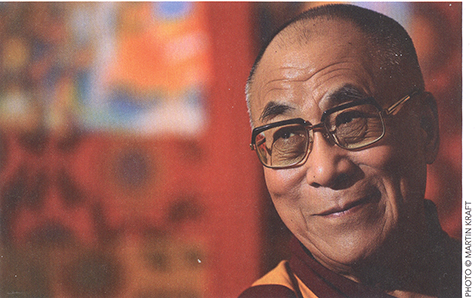
Dali LamaHis Holiness: At the outset, I would like to express my greetings. I am not staying many days in Bodhgaya, so I have been very busy. At the same time there are many people this year, aren’t there? There is a much bigger gathering this year than last year.

Now the teachings are finished and everyone is departing. Except for our memory, soon there will be nothing left of our days in Bodhgaya. This is the way of human life—time passes. As a Buddhist, one must think not only in terms of this lifetime, but in terms of trillions and trillions of years. To think in this way is also a form of practice. I think this is very important.

At the beginning, we must certainly learn from a teacher or from books. Then it is necessary to apply what we have learned to the new experiences and events we encounter in our daily lives. Now, in the present case, if we consider our departure from Bodhgaya, some people may feel sad. To dwell on this and to think, “Now we are leaving and we shall not see each other any longer” is not a very useful thing to do.

If, however, we contemplate the deeper significance, the implicit lesson in impermanence and change, and the nature of human life, then the experience of departing can be a useful one. It becomes meaningful. Physically we may be departing, but mentally, our memory and certain things we may have experienced in Bodhgaya—these will remain in our minds. The physical part cannot remain with you always. It will remain for a while and then depart. So, you see, all external material things, no matter how important or how beautiful, will eventually depart. But certain things which are related mainly to consciousness, to the inner experience, these, generally speaking, remain always with you.

Question: Your Holiness, how can we separate the essence of Buddhism from Tibetan cultural adaptations?

His Holiness: I think the basic teachings such as the Four Noble Truths and the Two Truths (conventional and ultimate) are the very foundation of Buddhism. These are teachings that are to be found in Indian Buddhism, Japanese Buddhism, Chinese, Thai, Burmese, and also in Tibetan Buddhism. They all have teachings such as the Four Noble Truths—these are basic to all forms of Buddhism. Now the Tantras are not practiced in common. They are practiced only in Tibet, in Japan, and perhaps in Korea. But we can nonetheless consider the Tantric teachings as authentic Buddhism, as the true teachings.

When we perform certain kinds of prayers and rituals in Tibetan Buddhism, in certain minor aspects, there may be Tibetan adaptations. These parts, then, can be dispensed with in the transmission of Buddhism to other cultures. For example, when we perform certain pujas (offering rituals), we use certain musical instruments. We use, for example, the conch shell: this is something we took from India. (In Tibet, there were no conches. But other instruments were common in Tibet.) When you Westerners perform these pujas, these rituals, it is not necessary for you to use these same instruments, you can use your own.

This is just one example of aspects that are local adaptations. In another place with a different culture and different people these things may not be relevant, they may not actually be useful, and that part should change. In the West, for example, there exists the tradition of using song; some Christians, for example, use song as a means of conveying and appreciating spiritual meaning. This is fine: it is useful.

Question: In the teachings there are many things mentioned that are contradicted by Western science. For example, it is claimed that the moon is 100 miles above the earth, etc. Many of our teachers hold these views to be literally true and Westem science to be wrong. Would Your Holiness comment on how we should view these teachings of the Buddha, and on how we should regard our teachers who hold to them literally?

His Holiness: This is a complicated matter. But I believe, and I have expressed this on several occasions, that basically a Buddhist attitude on any subject must be one that accords with the facts. If, upon investigation, you find that there is reason and proof for a point, then you should accept it. That is not to say that there are certain points that are beyond the human powers of deductive reasoning—that is a different matter. But things such as the size or position of the moon and stars, etc., are things that the human mind can come to know. On these matters it is important to accept the facts, the real situation, whatever that may be.

When we investigate certain measurements and descriptions as they exist in our own texts, we find that they do not correspond to reality. In such a case we must accept the reality, and not the literal scriptural explanation. This should be the basic attitude.

If something is contradictory to reasoning, or if it is found to be false after investigation, then that point cannot be accepted. That is the rule, that is the general attitude. For example, if something is directly experienced by the senses, then there is no question, no doubt, that we should accept it.

In the scriptures there are many different cosmological theories expounded. We do believe that there are many billions and billions of worlds, in the same way that Western science accepts there are limitless numbers of galaxies. This is something that is mentioned very clearly in scripture, though the size and shape may not be the same. They may be different.

For example, Mount Meru is mentioned in the scriptures. It is claimed to be the center of the earth. But if it is there, by following the description in scripture of its location, it must be found. At least we must get some indication that it is there, but there is none. So we must take a different interpretation from the literal one.

If there are teachers who still hold to the literal meaning, then that is their own business. There is no need to argue with them. You can see things according to your own interpretation, and they can see things as they see fit.

In any case, these are basically minor matters, aren’t they? The foundation of the teachings: the Four Noble Truths, what they have to say about the nature of life, about the nature of suffering, about the nature of mind—these are basic teachings, these are what is most important, what is relevant to our lives. Whether the world is square or round does not matter as long as it remains a peaceful and good place.

Question: Can Your Holiness comment on the power of a holy place such as Bodhgaya? What makes virtuous activities performed here more powerful and worthy of more merit?

His Holiness: The fact that many holy beings, spiritually advanced practitioners, stay and practice in a certain place makes the atmosphere or environment of that place change. The place gets some imprint from the person.

Then when another person who does not have much experience or spiritual development comes and remains in that place and practices, he/she can obtain certain special kinds of experience, though of course the right type of motivation and certain karmic forces must also be present in the person as contributing factors for such an experience to come about.

According to the Tantric teachings, at important places there are nonhuman beings, like dakinis, who have bodies that are much more subtle than those of humans. When great spiritual practitioners stay in a certain place and perform meditation and rituals there, then that place becomes familiar to beings like dakas and dakinis, so that they may inhabit the place and travel around it. As indications of this, sometimes one may notice an unusual noise or smell that seems to have no particular reason for existing. These are indications that some higher beings, different beings who have more experience, are inhabiting or traveling through that place. This could also act as a factor influencing whether or not a place is considered special.

In addition, in regard to Bodhgaya, we know that the Buddha himself must have chosen this place for a particular reason—this we believe. Due to the power of his prayer, later, when his followers actually come to this place, they may feel something—hence the power of the Buddha’s prayer could also be a factor.

Perhaps we must take human psychological factors into account as well. For example, Mahayana Buddhists feel strongly toward Sakyamuni Buddha, toward Nagarjuna, etc. In my own case, I have a strong feeling towards the Buddha, towards Nagarjuna, Arya Asanga, to all of these great beings. So when you stay at the place where these people were born and remained, then you feel something. If you use this feeling in the right way, that is fine, there is nothing wrong with it.

Question: Could Your Holiness say something about growing open to one’s own inner guru and also something about the absolute guru?

His Holiness: In general, there is said to be an inner guru, an outer guru, and a secret guru. This is explained in different scriptures, and there are some slight differences in the way these concepts are interpreted or explained in Nyingma, Kargyu, Sakya, and Gelug (the four main orders of Tibetan Buddhism). Likewise, there are differences in the way the different sects explain the four types of mandalas. Outer, inner, secret, and the mandala of reality (de kho na nyid).

The internal or inner guru is the innermost subtle consciousness of the guru. Now that innermost subtle consciousness which your guru has is exactly similar to the innermost subtle consciousness you yourself have. What then is the difference between the two? The guru, who is in effect using this subtle consciousness in his practice, is actually experiencing it with awareness, so that the consciousness becomes a form of wisdom.

When we faint or when we are dying, we too experience that subtle consciousness. And although that consciousness is there, although it is present, we are not aware or conscious of it. We do not realize that it is present. So the real guru, the inner guru, is this consciousness that exists within ourselves. It is also the inner protector, the real ultimate refuge. It is the experience of that state that is the real teacher, that is the real protector, that is the real Dharma. Thus there is this inner guru.

Now, you see, the manifestation of that consciousness in the form of a human body we call the external guru.

As for the secret guru, it is the special method or way that brings us to an awareness of that consciousness. This includes breathing meditations, the generation of bliss, and of the inner heat. These we may call the secret guru because it is through these techniques that we come to realize the inner guru. Sometimes this subtle consciousness is called “inner guru,” sometimes it is called the “ultimate guru.” In any case the two terms are synonymous.

According to the sutras, according to the Madhyamika school, “the absolute” refers to sunyata, to emptiness. In the Mahanuttaniyoga Tantras, however, the word “absolute” has two meanings. It can refer either to sunyata itself or to this special type of subtle consciousness (not to the ordinary, vulgar levels of mind, however). For the most part, when these scriptures refer to “the ultimate,” they are referring to the consciousness aspect, but not to ordinary consciousness, to a consciousness we call rigpa, the ultimate, innermost subtle consciousness. Even when the five senses are not active, the subtle consciousness is still there, though it is overpowered by the senses.

You see, all the senses are individual types of consciousness. The eye consciousness has color, shape, and so forth as its object: the ear consciousness perceives sounds, etc. Even though they are all different, having different objects, nonetheless, they are all of the same nature, of the nature of knowing. They may come to know through different means, but they are still of the nature of knowing. This common aspect they have in common we call shes pa, knowing. Now the rigpa, which we can call “awareness,” this innermost subtle consciousness, is also of the nature of “knowing.” It too is a “knower,” just as the eye consciousness is a “knower.” So both the coarser sense consciousnesses and the more subtle rigpa are of the nature of knowing. They are both “knowers.” The coarser types of consciousness come to know something because of the subtle consciousness. The basic nature of knowing thus comes from, or is due to, the existence of the subtle consciousness. Even during moments when the sense organs are very active, if we rely on the instructions of a proper, experienced teacher, we can separate the two experiences: the path of the coarser consciousnesses from the path of the subtle consciousness.

These points, however, are difficult. First of all, the matter being discussed is difficult; add to that the fact that the Dalai Lama’s English is poor, and it makes for an altogether awkward situation. You see, it is actually quite shameful. For quite a few years now I have had to speak with my own English, but it never comes out properly. In fact, sometimes, instead of getting better, it actually declines!

Question: Your Holiness, in what way does an individual consciousness exist? What part of that consciousness is still present after death? And is there a total dissolution of that consciousness when one reaches Buddhahood?

His Holiness: Consciousness will always be present, though a particular consciousness may cease. For example, the particular tactile consciousness that is present within this human body will cease when the body comes to an end. Likewise, consciousnesses that are influenced by ignorance, by anger, or by attachment—these too will cease. Furthermore, all of the coarser levels of consciousness will cease. But the basic, ultimate, innermost subtle consciousness will always remain. It had no beginning, and it will have no end. That consciousness will remain. When we reach Buddhahood, that consciousness becomes enlightened all­knowing. Still, the consciousness will remain an individual thing. For example, the Buddha Sakyamuni’s consciousness and the Buddha Kasyapa’s consciousness are distinct individual things. This individuality of consciousness is not lost upon the attainment of Buddhahood. Still, all of the minds of all Buddhas have the same qualities—in this sense they are similar. They have the same qualities while still preserving their individuality. 

Question: What does Your Holiness think of unilateral nuclear disarmament?

His Holiness: Now, you see, world peace through mental peace is an absolute. It is the ultimate goal. But as for the method, there are many factors that must be taken into consideration. Under a particular set of circumstances, a certain approach may be useful while under other circumstances, another method may be more useful. This is a very complicated issue which compels us to study the situation at a particular point of time. We must take into account the other side’s motivation, etc., so it is a very complex matter.

But we must always keep in mind that all of us want happiness. War, on the other hand, only brings suffering—that is very clear. Even if we are victorious, that victory means sacrificing many people. It means their suffering. Therefore, the important thing is peace. But how do we achieve peace? Is it done through hatred, through extreme competition, through anger? It is obvious that through these means it is impossible to achieve any form of lasting world peace. Hence the only alternative is to achieve world peace through mental peace, through peace of mind. World peace is achieved based only on a sense of brotherhood and sisterhood, on the basis of compassion. The clear, genuine realization of the oneness of all mankind is something important. It is something we definitely need. Wherever I go, I always express these views.

Question: Western monks and nuns sometimes find it difficult wearing robes in the West. We are often stared at and looked upon as being strange. Does your Holiness recommend wearing robes in non-Buddhist countries?

His Holiness: This we must judge according to particular cases and circumstances. If you can remain in robes without disturbing others, then of course it is better to wear robes. In some particular cases, however, this may be difficult.

Basically, as practitioners, we must remain in society. We must be good members of the society in which we live. So if society has a negative attitude towards you, this may be good neither for yourself nor for society. This is the basic position. Now if for this reason, one decides not to wear robes, if it is not suitable, better not to do so under those circumstances. This is all right. If the circumstances should change, then change. Gradually the society itself may change its attitudes. The West is a society in which Buddhism has never flourished, and this is changing. I think that, compared to thirty years ago, today when monks travel on an international air carrier, they are recognized as monks. So, you see, time goes on, and gradually things will change. The important thing is not what we wear but our behavior in our everyday lives.

Thank you very much. Today there is not much time, but I am happy to have shared these few moments with you. All of us have come from different parts of the world and we may even have different faiths, but we all have the same human mind. Isn’t that so? When it comes down to the level of basic human qualities we are the same, there are no differences. On a superficial level, however, there are many, many differences. So what we need to do is go to a deeper level. There we find that we are all human brothers and sisters. No barriers exist for us. Everyone wants happiness and does not want suffering, and everyone has the right to achieve permanent happiness. So we must share each other’s suffering and help each other. If we cannot help others, at least we must not harm them. That is the main principle. Whether we believe in the next life or not does not matter. Whether we believe in God or not doesn’t matter. But one thing that does matter very much is that we live peacefully, calmly, with a real sense of brotherhood and sisterhood. This is the way to achieve true world peace, or if not world peace, then at least a peaceful community. That is important, very useful, and very helpful. Thank you very much.

His Holiness the Dalai Lama is recognized as the fourteenth incarnation in the line of Dalai Lamas, and is the head of the Tibetan government-in-exile in Dharamsala, India. He is known the world over as a great spiritual teacher and tireless worker for peace.

Dalai Lama, excerpts from Answers: Discussions with Western Buddhists, edited by José Ignacio Cabezón. Copyright © 2001 by José Ignacio Cabezón. Reprinted by arrangement with The Permissions Company, LLC on behalf of Shambhala Publications Inc., Boulder, Colorado, www.shambhala.com.


The Spectrum of Consciousness: An Interview with Ken Wilber

Printed in the  Winter 2026  issue of Quest magazine. 
Citation: Smoley, Richard   "The Spectrum of Consciousness: An Interview with Ken Wilber"   Quest 114:1, pg 12-18

By Richard Smoley

Ken Wilber is one of the most dynamic and respected thinkers of recent generations. His numerous books include The Spectrum of Consciousness; Up from Eden: A Transpersonal View of Human Evolution; The Atman Project: A Transpersonal View of Human Development; Sex, Ecology, and Spirituality: The Spirit of Evolution; and, most recently, Finding Radical Wholeness: The Integral Path to Unity, Growth, and Delight.

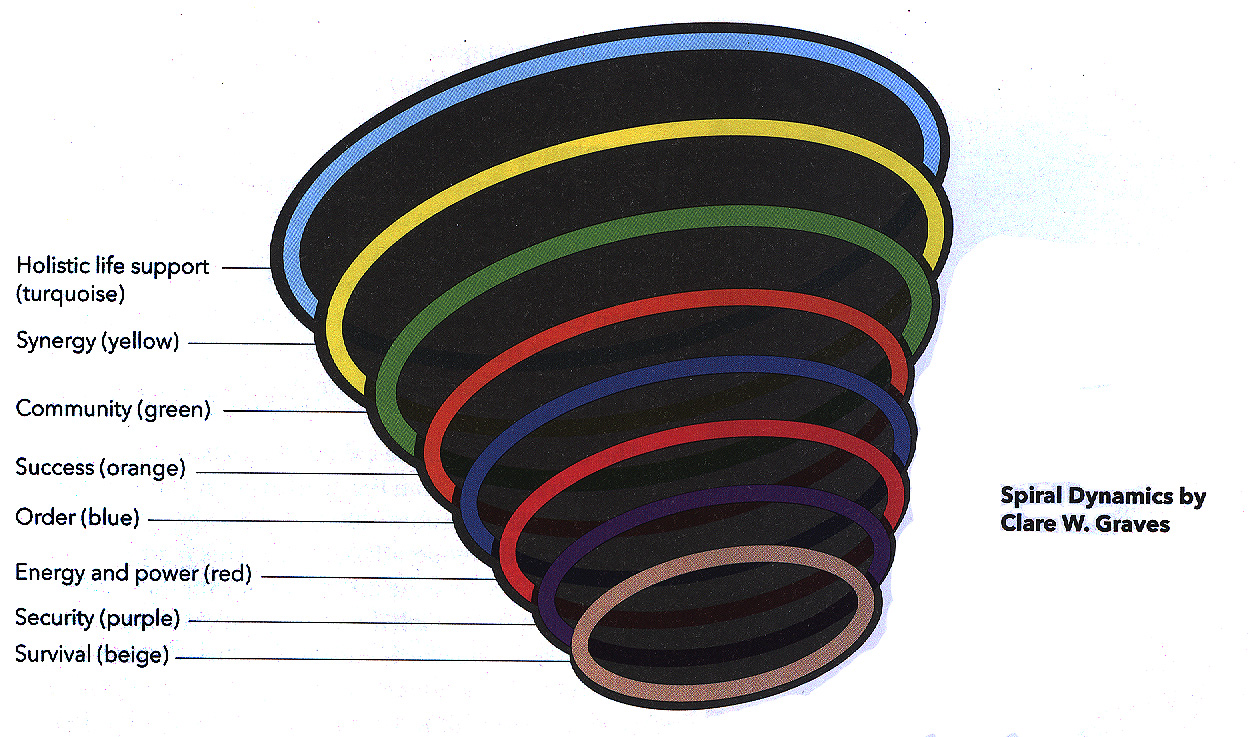
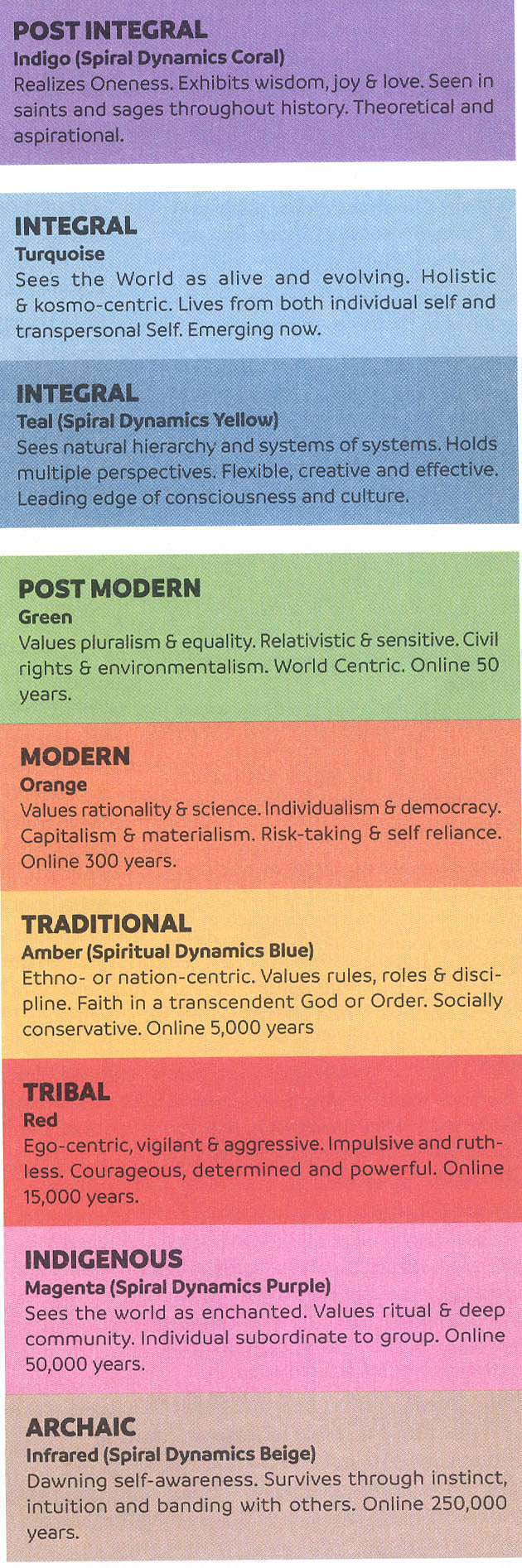
One of the central themes of Wilber’s works is the evolution of consciousness from the most basic atomic particles all the way up to the human level and beyond. Influenced by figures such as the Swiss philosopher Jean Gebser, he relates the various stages of human history to different levels of development in human consciousness. Wilber also makes use of the Spiral Dynamics system developed by psychologist Clare Graves (see diagram), with his own modifications.

In this interview, conducted by Zoom in June 2025, Wilber discusses these ideas and their relation to the present day.

Richard Smoley: I’’ll start with one concept that seems to be central to your philosophy, which is the evolution of consciousness. The idea is not only that consciousness has evolved from, say, the days of the paramecium, but it has also evolved in historical times over recent centuries. Could you talk about your views on that point?

Ken wilberWilber: Sure. There’s a fairly widespread school of philosophy in the West called panpsychism, and panpsychism maintains that what we call the psyche, or the mind, is pan-, or present everywhere. That means that atoms have a bit of mental capacity. Molecules have a bit of mental capacity. Single-celled organisms have a mental capacity. Multicellular organisms have a mental capacity, and all the way up the tree of life from fish, amphibians, reptiles, and mammals, to humans, which have the highest reach of mental capacity.
Let me say something about what I mean by mental capacity, because I don’t like the term panpsychism. The reason is that psyche is too complex a term for the type of mind that a proton or a neutron or an atom has. I much prefer Alfred North Whitehead’s term: prehension, because prehension just means touching or feeling, and that touching is the type of mentality that an atom has: an atom touches other atoms, and those atoms together make up molecules, and molecules touch other molecules.

When a bunch of molecules come together, they form single-celled organisms, and those single-celled organisms touch other single-celled organisms to form multicellular organisms, and those go all the way up the tree of life, from fish to amphibians, to reptiles, to mammals, to humans.

Their mentality also goes through a variety of stages of development; this was discovered by America’s second greatest psychologist, James Mark Baldwin (America’s greatest psychologist, is, of course, William James). He wrote a book called Thoughts and Things. Baldwin invented developmental psychology, which is the study of the stages of mental growth (or of prehensive growth) that humans went through. He took the fairly common Western philosophical tradition, focusing on so-called goodness, truth, and beauty, and found that each of them went through a series of stages of unfolding or development. He named those stages things like prelogical, logical, translogical, and integral.

The good, the true, and the beautiful. The good involved the stages of moral development: how we treat each other with goodness and care and concern and morality. He took truth to mean scientific, objective truth. And then the beautiful, which was beauty in the eye of the beholder, or of the pronoun I.

To these three he added religion, because he noticed that religious belief also went through the same stages of development. So that gave us four different lines of development. Baldwin actually discovered around seven or eight total levels of development.

That was the beginning of developmental psychology. By the 1950s these stages of development had become fairly well known among the psychological community, and there was an outburst of many different models. Psychologists came to realize that there are around a dozen or so different types of intelligence: cognitive intelligence; moral intelligence; ego development, or ego intelligence; spatial; mathematical; musical; and so on.

Each psychologist, unknowingly, singled out a particular multiple intelligence and studied the growth of that intelligence. Abraham Maslow chose a needs hierarchy of development. Jean Piaget chose a cognitive line of development. Lawrence Kohlberg chose a moral line of development. Jane Loevinger studied ego development. Each major researcher selected a particular type of intelligence, studied the stages of growth that it went through, and found that everybody went through these stages. If they continued to grow and develop, they went through all eight or so major levels.

These psychologists were all describing the same basic levels. But because each of them was dealing with a different line of development, each gave these levels different names. Piaget gave cognitive names to his stages: sensory-motor intelligence; preoperational intelligence; concrete operational intelligence; formal operational intelligence; and systemic or integral intelligence. Kohlberg named them according to the stages of moral development: preconventional, conventional, postconventional, and systemic.

Eventually they realized all of them were dealing with the same basic levels, even though they each gave them different names. That became the first full-fledged developmental model of consciousness.

Jean Gebser argued that each of these levels unfolded at a different time in human history. He gave names to these stages: archaic, magic, mythic, rational, pluralistic, and integral.

The earliest, which he called the archaic stage, was our basic transition from the great apes into Homo sapiens, which started around 400,000 years ago. That went to the so-called preoperational stage. This was a kind of magic belief, because the mind had not yet fully differentiated from that which it was aware of. As it started to invent symbols and words and an alphabet, it wrote, say, the word tree. That was called the signifier. The signified is what came to your mind when you read the signifier. Whenever you word the word tree, you form an image of a real tree in your mind. The actual referent of the signifier tree is the real tree. But because the mind had not yet fully differentiated the symbol tree from the real referent, or the real tree, it couldn’t distinguish between operating on the signifier and operating on the real tree. So if it changed the signifier, or the word tree, they felt that it magically changed the real tree. That was just one of the very earliest predifferentiated stages of development. It was called magic: if you change the signifier, you magically changed the referent, because they weren’t clearly differentiated.

Then, in the mythic stage, human beings learned to differentiate the signifier from the referent. This began to happen around 50,000 years ago. But they didn’t get rid of magic. They just themselves could no longer perform magic, because they had fully differentiated the signifier from the referent. Instead, they transferred the capacity for magic to a whole host of heavenly gods, goddesses, divine nature, spirits, and so on. If we prayed to those heavenly beings with a great deal of sincerity and belief, we could ask them to perform magic on our behalf. We would often pray for them to make crops grow. In today’s world, we’d pray to them to get a new car, or a girlfriend or boyfriend. If we prayed with a great deal of sincerity, they would magically get us the car, the new house, or the pay raise, or whatever we wanted.

Then, as we moved into the Common Era, around the time of Christ, we moved into concrete operational thinking, which Piaget defined as thought operating on the real world. An example of concrete operational thinking would be: I go in the garage, I get my bike, I pull it down from the wall, I get on it, I put my feet on the pedals, and I start pedaling. All of these are concrete operational behaviors because they’re me concretely operating on the world. My thought is operating on concrete items.

By the time we reached the Western Renaissance and Enlightenment, formal operational cognition started to emerge: we started using things like logic or mathematics, which is thought operating on thought, not just on the concrete world. Thought operating on thought gave us rationality, logic, and mathematics.

The next stage is one that I call green. Here it is noticed that rationality forms single, universal, holistic systems. There isn’t Protestant chemistry versus Hindu chemistry versus Buddhist chemistry: there’s just chemistry. It’s a single, unified science, and it applies to everywhere on the planet and to every human being on the planet. So it forms single, unified systems of thinking.

That’s what rationality does, and that’s what science does. So we have multiple sciences: chemistry, biology, physics, psychology, sociology. Each of those are separate individual items. But they apply to the single universal system. There’s only one basic chemistry, only one basic biology, only one basic psychology, and so on.

Then the next stage starts to notice: “Wait a minute. There are all sorts of different cultures around the world. There’s French culture, German culture, Chinese culture, American culture, and so on. And each of those have separate but important truths.” We call that multiculturalism. That was discovered roughly in the 1950s and ’60s.

We call that multiculturalism or pluralism, or more commonly postmodernism, because it came after modernism, which was formed by rationality and which recognized just a single universal system for each individual science. Multiculturalism recognized a multiplicity of separate truths, each referring to a different multicultural system.

But those green systems could not unify all those multicultural systems. So we just had a plethora of multicultural truths and no way to bring them together. Then came what Clare Graves called “the monumental leap to second tier.” That was when we began to create paradigms out of integrated systems of thinking, which would usually unite two or three separate, individual sciences into a single unit, for example uniting biology and chemistry into biochemistry.

This was often called crossparadigmatic: when they brought together these separate individual multicultural truths. That’s why Claire Grace referred to this stage as a “monumental leap,” because none of the previous stages could unite various paradigms into crossparadigmatic unities. That’s what the integral stages did. So we divide those into teal and turquoise stages, or paradigmatic and crossparadigmatic.

About 5‒7 percent of the population reach the teal or paradigmatic stages, which isn’t very much. But the percentage that reached turquoise—the cross-paradigmatic stage—was significantly less: 0.5 percent. So a very small percent of the population reached turquoise levels. But it was a real stage of development. It was available to everybody who kept growing up to the cross-paradigmatic stage.

That gives us a full history of prehension, which started from the lowest—quarks, protons, neutrons—and continued into atoms and molecules, into single-celled organisms into multicellular organisms, into fish, amphibians, reptiles, mammals, and human beings. Human beings in turn developed through the archaic to magic to the mythic to the rational to pluralistic to integral stages of development. That gave us our entire spectrum of consciousness, of the stages of development that our consciousness went through. That’s the story of our historical unfolding of consciousness.

Smoley: Thank you. That’s very comprehensive. You would seem to be saying that these stages represent a cumulative growth.

Wilber: Right.

Smoley: The contrasting perspective, which is represented by a fair number of thinkers, including Gurdjieff and René Guénon, point to the fact that we may have lost as much as we have gained cognitively. For example, Bushmen could perceive things that Laurens van der Post couldn’t, as he writes in his books. Max Weber spoke of “the disenchantment of the world.” There’s a sense of loss, which may be a cognitive loss as well as an emotional loss. How would you respond to a claim like that?


  Spiral Dynamics
This diagram expounds the levels of Clare Graves's Spiral Dynamics, as described in Spiral Dynamics: Mastering Leadership, Dynamics, and Change, by Don Edward Beck and Christopher C. Cowan.

Wilber: That is a fundamental confusion that all retro-romantic thinkers make. The confusion is very easy to understand, because in the first year or so of life, the brain-mind has not yet differentiated itself from the referent. So it comes up with all sorts of symbols, all sorts of words, but those words are not yet differentiated from the thing they represent. The word tree is not differentiated from a real tree, so it appears that there’s a unity in consciousness—and there is. But it’s a prerational unity. It’s not a fully developed mystical unity. If we use the Christian version of the great chain of being, it goes from matter to body—body meaning real, living organisms—to mind, to soul, to spirit.

When you reach the spirit stage and have a unity experience, it’s a unity with all five of those levels: matter, body, mind, soul, and spirit. But that’s not the type of unity that a newborn has. A newborn is one with the material environment, from which it has not yet differentiated itself. That’s not a very high type of unity: it’s not a unity with matter and body and mind and soul and spirit. But if you have a Zen Buddhist satori, a mystical experience from the highest level, it is a unity with all five of those stages of development. If you include models that give eight or even ten stages of development, it’s a unity with all of those stages.

When developmentalists were studying that first, earliest, or archaic stage, they naturally found that the infant could not differentiate itself from the material environment. Being sort of materialistic at heart, the developmentalists looked at that as an absolute unity with the entire universe. But it wasn’t. It was only one with the lowest level of the entire universe, which is a terrifyingly narrow and small type of unity: it’s not a full, complete unity. But the retro-romantics all confuse this ultimate unity with the infantile unity. I myself did this at the very first stage of my own understanding: I felt a unity with the entire world.

But as we grew up and developed into body, mind, soul, and spirit, we’re cutting off our unity with the entire universe. We arren’t: we’re actually growing from the matter to the body stage, and from the body to the mind stage.

At the mental stage the ego starts to emerge, and we get a separation of ego from body and matter. As soon as retro-romantics see the emergence of the ego, they say, “That’s a loss of our profound unity.” They all make that confusion, and that’s why I call it retro-romantic, because it’s a retrogression. It’s not a high level of unity: it doesn’t even get to soul or spirit.

We call them retro-romantics because they have a romantic vision that sees the earlier stage of unity with the material world as a unity with the entire universe. It’s nothing like that at all. It’s a unity with the lowest level of the entire universe.

If you just become one with the material level, you’ve clearly gone backwards from matter, body, mind, soul, or spirit, and you’re just identifying with material level. That’s obviously a regression. You’ve gone back down to the lowest level of the entire universe, which is simple matter. You’re not even at the level of body or mind or soul or spirit.

The people that make the kind of statements that you just summarized are all retro-romantic thinkers, because they all make that same mistake: they think, “I’m going to go back to the unity I had when I was an infant.” No, you’re not. That would be horrifying. If you actually regress back to the material level, you wouldn’t be one with body, mind, soul, or spirit. What kind of unity is that? That’s just a unity with the very lowest level of the material universe, which is nothing to be proud of.

Spiral Dynamics copy  
 Ken Wilber's variations on the system (chiefly having to do with uses  or colors), which he uses in this interview.  

Smoley: Thank you. That’s very enlightening. The model you just presented is one of increased unification and integration of consciousness. How do you relate this to the reality of the present-day world, where there’s an enormous sense of increasing fragmentation and isolation?

Wilber: As you move up this great chain of being, as you go from matter to body to mind to soul to spirit, (or to use Jean Gebser’s six stages, archaic to magic, to mythic, to rational, to pluralistic, to integral), something can go wrong at each of those stages.

You can move from matter to body. When the body level starts to emerge and we begin to identify with our feelings, emotions, and separate ego, that is what Gebser called “magic.” Again, because we haven’t yet fully differentiated the mind from what it’s thinking about, we think that to change the word, or the signifier, is to change the actual referent, or what the word represents. That’s just not true. It happens in a magical cognition, a magical imagination, but that’s magic that’s not real.

Then we move from magic to the mental and develop a fully mental, rational stage of development. Something can go wrong at that stage. When that happens, we don’t transcend and include the previous stage, which is healthy development: all healthy development transcends and includes the previous stage. You can overdevelop mind, or you can repress the previous stages of development. You don’t integrate them: you don’t transcend and include them; you transcend and repress them.

When you do that, you split off the mind from the body and from its material elements, and when you split off the mind from body and matter, you are creating repression. You’re repressing the lower levels. You’re not integrating them. Because of that, almost everybody develops some form of body-mind dissociation. That’s where you split the mind off from the body and its material components. That’s not good. When that happens, we generally form various types of depression because we’re not in touch with our body and matter, or we form some type of split or dissociation. We don’t differentiate and integrate: we differentiate and repress. That repression is an uncomfortable feeling or dissociation: almost everybody has some degree of repression or dissociation or splitting. That’s why the mind-body problem is called the most difficult problem in Western philosophy: what is the relation of this mind and body, especially if I’m split off into just my mind, and I’m repressing my body?

Smoley: In your discussion you’ve alluded more than once to Clare Graves’s Spiral Dynamics, which posits these levels of consciousness in terms of colors. If I remember correctly, beige is the lowest. Red is the next. Up and up and up, and turquoise, as you point out, is at the top as the most integral kind of consciousness.

One thing that intrigued me about in Spiral Dynamics is the speculation of a level beyond turquoise, which they call coral.

I’m curious to think what you associate with this level of coral—where you think it will go beyond turquoise.

Wilber: We’ve already talked about a higher stage containing a bigger perspective. For me, the turquoise is the eighth major stage of development, and the ninth major stage of development is the psychic stage. It’s added a greater perspective. And that means you have a larger identity, because as development goes through these eight major stages, each stage adds a larger self identity.

You start out identified just with the material aspects of your being. Within the first year or so you add a second stage or a second-person perspective; when you do that, you identify with all of your emotions and your feelings, and so on. In the third stage, you add a third-person perspective. You expand from identifying with your self and your feelings and emotions to identifying with the mind. Matter, body, mind, expand to the full ego self. So you’ve gotten bigger again.

Then, as you move beyond the ego, you start to move to the trans-ego stages, including the green, or multicultural, integral stage, and then from there you move to the interval stages: the paradigmatic and the cross-paradigmatic. Each of those involves getting a bigger self, a self that’s more inclusive, that can identify with larger perspectives. And each stage does just that.

What goes beyond the eighth stage, or the turquoise stage, is the first trans-integral stage. This is the stage that Beck and Cowan call coral (although they’re not very clear about what coral is).

For me, the next biggest self you can have once you’re identified with the full range of mental capacities is when you go beyond your identity with the self to an identity with the earth, which is what I mean by the word psychic. That actually includes a oneness with the lower levels of the entire universe.

Mystical experiences, for example, begin by identifying with all of the universe. And if they get bigger, they go into the stage that’s beyond the turquoise: identification with universal consciousness. This is a very real mystical experience. It’s often called cosmic consciousness, because it’s an identification with the entire cosmos

That’s what I believe is the next stage beyond turquoise. And remember, only 0.5 percent of the population reach turquoise. A tenth of the percentage of people that identify with the previous stage identify with the next stage. So the percent that reaches beyond turquoise is even less than 0.5 percent. One tenth of 0.5 percent is not very much, so there aren’t a lot of people having that type of cosmic consciousness experience, but the ones that do are all identified as mystics, and they tend to think of themselves in mystical terms.

Smoley: I’d like to ask you about psychology. A lot of what you say has been connected with a movement called transpersonal psychology, and you know many if not all of the leading figures in that movement. There was a time when when this movement seemed to be burgeoning, say with the emergence of Maslow’s humanistic psychology in the sixties, into the nineties, when psychiatrists started listening to Prozac and stopped listening to anything else.

Wilber: Right.

Smoley: Where would you say the state of transpersonal psychology is now? Where do its insight stand in regard to mainstream psychology? Because they would seem a lot more on the fringe now than they may have done fifty years ago.

Wilber: It’s often referred to as fourth force: the first force being psychoanalysis, the second force being behaviorism, the third force being humanistic, existential psychology, and the fourth force being transpersonal. You can notice that each one of those is going higher on the scale of consciousness. By the time we get to the fourth force, or the transpersonal, the name gives it away. It’s whatever stage is beyond the personal stages. In other words, what they’re really talking about when they talk about transpersonal psychology is states of consciousness that include cosmic consciousness and higher.

That’s what transpersonal means: beyond the personal stages of development comes this transpersonal, or cosmic consciousness, stage. It’s now become fairly well recognized, although it’s still the smallest of the four forces. But it’s real. It is dealing with the smallest percentage of the population, the percentage that has reached cosmic consciousness. And remember, that’s a tenth of 0.5 percent. That’s not a tremendous number.


Subcategories